
The Challenge
Picture this: someone in Delhi searching “study in Canada” and someone searching “IELTS coaching near me” were landing on the exact same page. Same generic headline, same broad form, same confusing message.
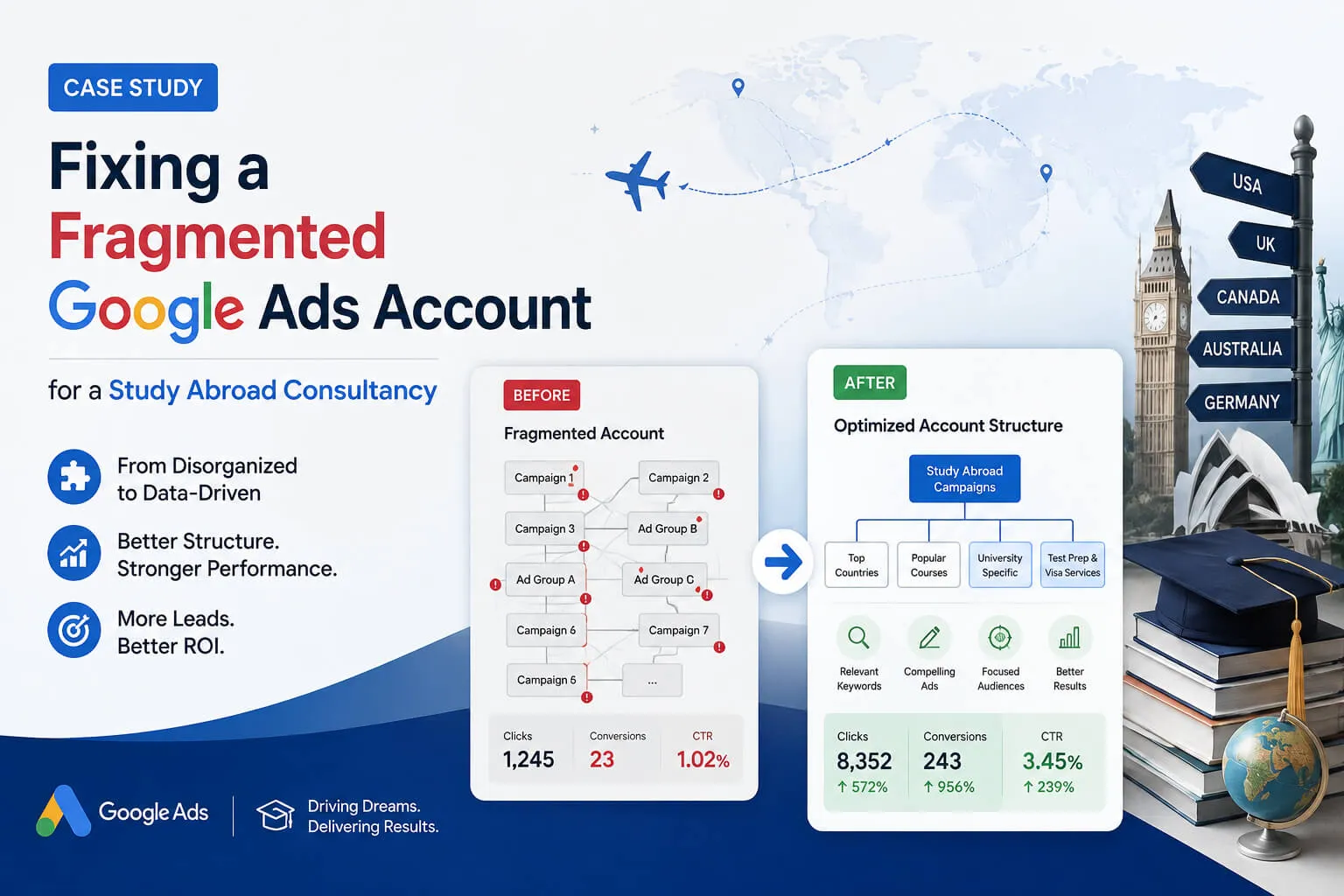
That was the account before the cleanup: two distinct offerings (destination university admissions like Study in USA, Canada, UK, Australia vs. test preparation for IELTS, GMAT, SAT, TOEFL) were combined into generic campaigns that could not distinguish user intent.
Core Account Weaknesses:
- One generic landing page for every service and country destination, causing low Quality Scores and high bounce rates.
- Mixed-intent campaigns where test-prep coaching keywords cannibalized university admission budgets.
- Stale ad copy with identical headlines and zero ad pinning strategy.
- No real conversion visibility: GTM was not configured to track phone calls, form starts, or consultation calendar bookings.
The Strategic Fix
1. Account Restructure by Distinct Service Lines
Split the account into two isolated campaign pillars:
- Destination Campaigns: Study in USA, Study in Canada, Study in UK, Study in Australia — each with its own budget, phrase/exact match keywords, and target CPA bidding.
- Coaching Campaigns: IELTS, GMAT, SAT, TOEFL — built specifically for local students seeking test preparation classes.
2. Dedicated, Message-Matched Landing Pages
Replaced the single generic page with high-speed, service-specific landing pages matching exact user search intent, lifting Google Ads Quality Score from 4/10 to 8/10.
3. Full Tracking Rebuild
- Deployed Google Tag Manager (GTM) from scratch with GA4 custom events.
- Created micro-conversions (form starts, brochure downloads, WhatsApp clicks, and Calendly appointment bookings) to feed rich training data to Google Smart Bidding.
4. Intent-Driven RSA Ad Copy
Wrote customized Responsive Search Ads (RSAs) for each destination and test exam, pinning high-credibility headlines to Position 1 and 2 while letting Google optimize secondary hooks.
Measurable Results
- +72% Increase in Student Consultation Bookings within 60 days of restructure.
- Significant CPL Reduction: Eliminated budget waste from mixed-intent queries.
- Airtight Conversion Measurement: Full visibility into lead quality across all study destinations.
Looking to Fix an Underperforming Ad Account?
Explore my full Google Ads Management Services or contact me for a comprehensive account audit.